
The AI Agents payments company that markets like a beauty brand
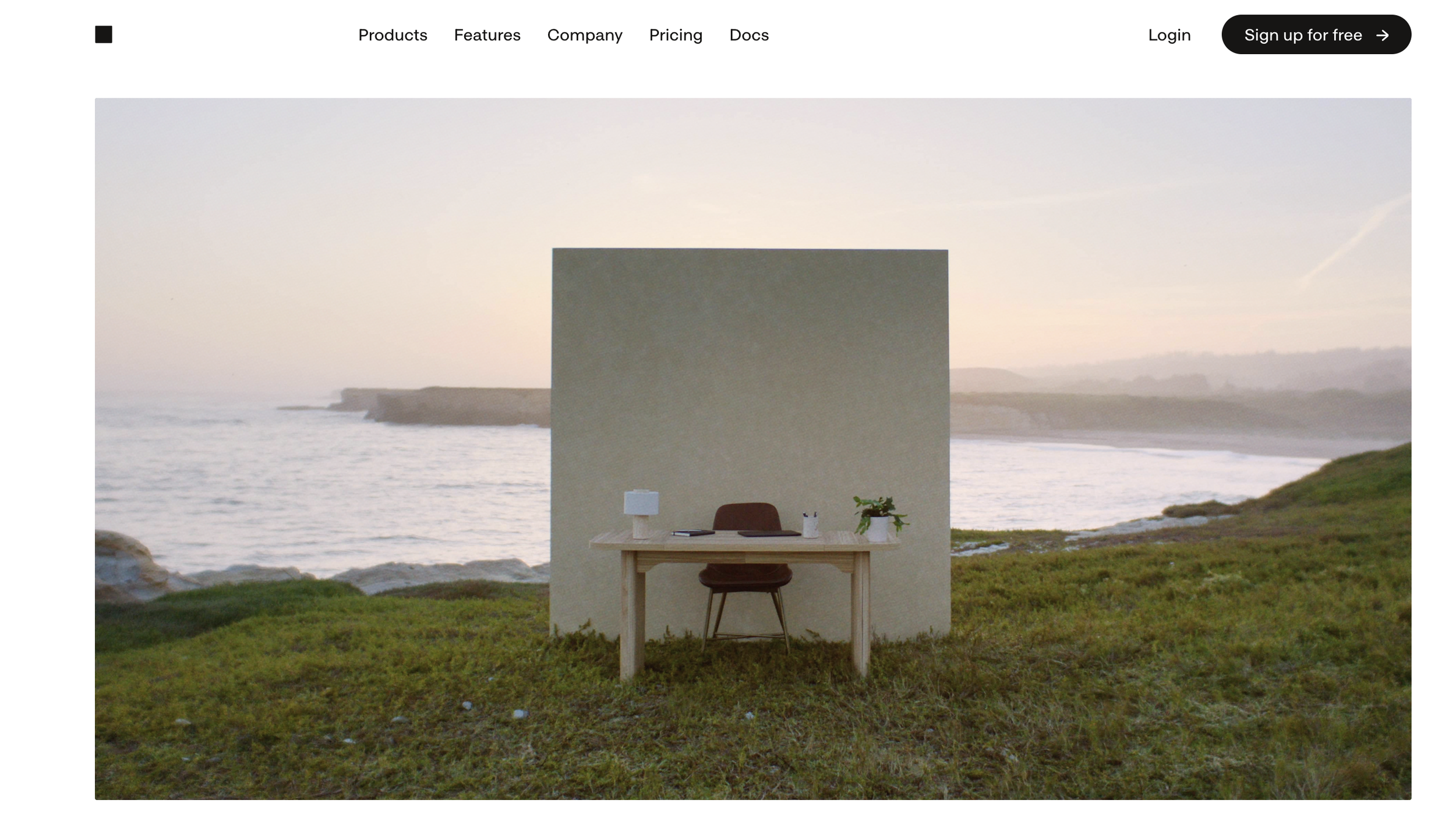
Natural’s About Us page.
Most fintech marketing, if you lined it up along a gallery wall, would look like the same company photographed at slightly different times of day: the trustworthy blue, the dashboard floating at a jaunty angle over a gradient, the stock photograph of a team laughing at something on a laptop, the line about payments being seamless and secure that could have been written by a machine. It is a visual language designed, entirely reasonably, to say one thing above all else — which is that nothing surprising will happen to your money.
Which is why Natural, a San Francisco start-up building payments infrastructure for AI agents, stopped me mid-scroll. Its website looks less like a bank than like a carefully art-directed independent magazine: paper and print textures, a fine film grain, a team photographed outdoors rather than around a whiteboard, demo agents with names like Penny and Patch.
Its careers page gives every new hire a first-person essay about why they joined — the essays read like the profiles at the back of a good quarterly. One designer recalls camping overnight on a Sydney footpath as a teenager for a pair of Jordans; an engineer describes being so absorbed by the system she is building that she wakes up hungry for it. And somewhere in the company values sits a line insisting that everything matters, from API design to email signatures to the weight of a divider rule, which may be the most fashion-house sentence ever written by a payments company.
Leggings, lip gloss, ledgers
Much of this sensibility comes from Natural's head of marketing, Gabby Smith, who arrived after a decade in fashion and beauty social media, most recently as Head of Social at Alo and Director of Social at Rhode. But the germ of the idea came from Natural's chief executive, Kahlil Lalji, a founder who has written about designing his own life with the same exactness — from the temperature his bed is set to each night to the walk to the office he deliberately lengthens by three minutes because the route calms him. His brief for the marketing function was to make fintech feel “as influential and tasteful as an it-girl brand”, and to deliver it he went looking well outside finance, hiring Smith.
Her own joining essay is a small masterclass in the register the brand has since made its own. It opens with a text from Lalji, her former upstairs neighbour in Santa Monica, arriving while she was at a Dodgers game, and it is disarmingly candid about the leap, including her first reaction to his memo, which was, give or take an expletive, to wonder what agentic payments actually were. The striking thing, a year on, is how completely the company has committed to the idea, and how naturally (forgive me) she has made it look.
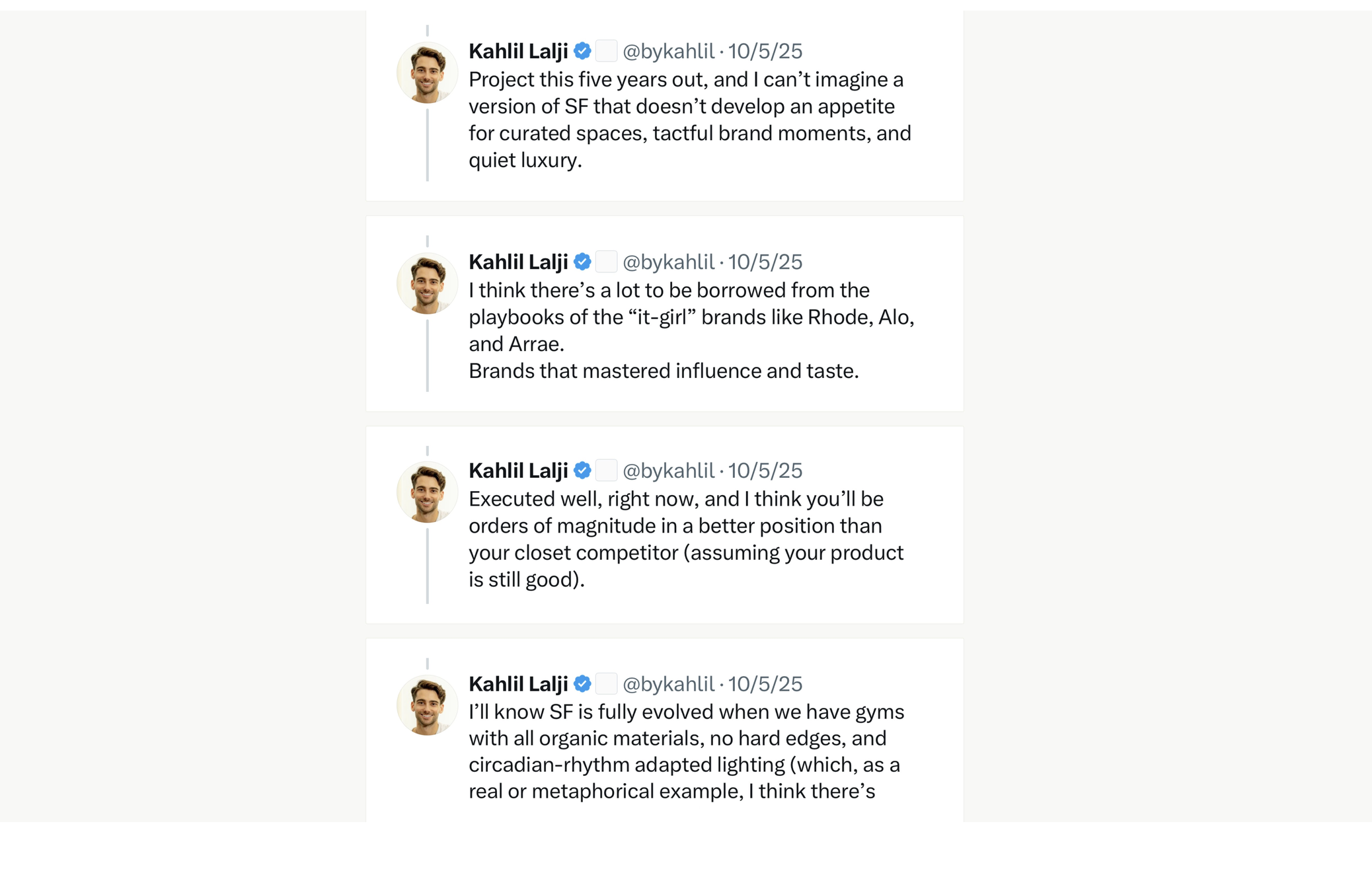
Natural CEO Kahlil Lalji’s take on the future of Silicon Valley branding
Giving money its intimacy back
The most illuminating account of why Natural’s branding matters comes from Sarah Xu, who joined from Cognition as Natural's agent marketer and whose essay reads more like a piece of cultural history than a hiring post. She traces the history of money from tallies kept in memory to tokens, coins and paper, observing that each step bought reach at the expense of closeness and asked people to extend a little more trust to something a little more abstract. "Payments infrastructure has always been social infrastructure," she writes, and agents paying agents is simply the next and most abstract step yet.
Read alongside the brand, that history makes the marketing look less like styling and more like an argument. If the rails themselves are about to become more invisible and more automated than ever, then the company you trust to run them ought to feel as human, as tactile and as particular as possible. Xu makes the point directly elsewhere in the essay, arguing that beauty is badly undervalued in an industry that prizes function over form, and that how something feels shapes how it gets used. It is a rare thing to find a fintech willing to say that out loud — and rarer still to find one whose website so plainly believes it.
Why it works
The first reason is that the category is brand new. Kirsten Green, whose firm Forerunner led Natural's $30 million Series A in July, said frankly at the time that agentic payments "aren't yet a thing". When you are building ahead of a market, you cannot win on comparison tables; you are inviting people into a belief about the future, and the first people you need with you are developers, founders and the engineers you hope to hire. That is a community-building challenge — and community-building is exactly what the best beauty and athleisure brands have spent a decade perfecting.
The second is that intimacy is its own kind of trust signal. Traditional institutional finance has tended to build trust through distance: the institutional voice, the absence of anyone's face, the reassurance of something large and impersonal. Natural builds it through proximity, showing you the people, what they care about and how seriously they take the details. For a developer deciding whose API to wire into an agent that will move real money, the attention to detail may be an encouraging first impression. Whether that care extends to the infrastructure itself is the question the product still has to answer.
The third is that infrastructure is invisible by design. When your product is an API, the brand is one of the very few places where taste can show. Alo and Rhode made leggings and lip treatments feel like worlds people wanted to live in. Natural is doing something similar for payment rails — on the not unreasonable theory that developers, for all their talk of specs and benchmarks, fall for a tool much as anyone falls for a well-made object: by how it feels to use.
Taste might bring a developer through the door. It cannot tell them whether a payment will settle, a dispute will be resolved or an agent will stay within its authority. Natural's real test is whether the meticulousness of the brand is matched by the systems underneath it.
The frontier: marketing to an audience that isn't entirely human
The most forward-looking thing about Natural's marketing may be a job title. An agent marketer is a role that barely existed a year ago — and Xu is candid that it is uncharted territory. If marketing works by provoking a human response, what does persuasion look like when part of the audience is a bot? An agent may never admire a beautifully designed website. It may simply discover an API, evaluate its capabilities and operate within the permissions a human has already set. Marketing to that audience may have less to do with persuasion than with making a product legible to machines. Can an agent be taught something like taste? She dares to borrow a question from filmmaker Wong Kar-wai about whether a machine can ever truly yearn, and leaves it open, which is the honest answer.
Nobody has yet worked out how to market to an audience that is part human and part machine, but Natural is one of very few companies asking the question in public, and the answer will matter well beyond payments. The interesting work ahead is carrying the brand's warmth into the places finance companies are usually at their coldest: the documentation, the compliance pages, the explanation of what happens when a payment is disputed. Given how much care has gone into everything else, I suspect that is already on the list.
Where the brand will be tested
As Natural grows, it will need to speak just as persuasively to the institutions behind the payment rails as it does to the developers building on top of them. Its banking partners, compliance teams and regulators have different questions from the founders who first fell for the brand, as do the finance directors at large companies whose agents may eventually move substantial sums of money. Institutional finance has long rewarded restraint, and to a risk committee a brand built on French New Wave film grain and first-person essays may read as charming at best and unserious at worst — simply because it looks nothing like what that room is used to trusting.
The answer is not to tone the brand down, which would be to throw away the most distinctive thing about it, but to add a second register alongside it: thought leadership made with the same care, written for the people who sign off rather than the people who build. That means clear, unhurried explanations in minimal type fonts on uncluttered pages of how agent identity, dispute mediation and compliance actually work. It would include more perspectives from its legal and risk people as well as its designers, and writing that takes a banker’s questions as seriously as a developer’s.
Natural already has the raw material: a Stripe-trained head of legal and compliance, a bank chief executive among its backers, a founding memo that has become widely read in the category, and a team whose essays show it thinks hard about what the company is for. What remains is translating that thinking into the shorter, plainer forms a risk committee will actually read to the end. Done well, the warmth stops being an obstacle in those conservative rooms and becomes the differentiator, because almost no payments company explains itself to a compliance officer with the care it lavishes on its homepage.
That’s why I’d suggest:
That's why I'd suggest two additions to Natural's editorial strategy:
A dedicated collection of institutional thought leadership. Reported articles and executive perspectives examining the questions facing banks, enterprise buyers and compliance teams as AI agents begin moving money. Less product explanation, more original argument, supported by data and real-world examples.
More bylines from the people who sign off, not just the people who build. Interview-led essays from Natural's legal, risk and payments specialists on agent identity, liability, disputes and what happens when an automated transaction goes wrong. These are the perspectives that could give the company's distinctive public voice greater depth and institutional credibility.
And these are just a handful of ideas for an overall content strategy that speaks to the audiences and stakeholders that matter.
What Natural shows other fintechs
The lesson for other fintechs is not to buy some paper textures and hire someone from a beauty brand, although several surely will. It is that Natural decided, early and on purpose, to have a very strong and considered point of view about who it is, both on the screen and behind the scenes. Most finance brands are designed to be unobjectionable; this one was designed to be remembered.
In a category where nearly every company describes itself in the same eleven words, that is not frivolous. It may well be the most strategic thing about it.
Get in touch if you want to discuss editorial, thought leadership or brand strategy so that you, too, have people talking. hello@thecopyguild.com